
Explosion Proof Window Air Conditioners
Window-style air conditioners modified for hazardous location use represent the most affordable entry point into explosion-proof cooling. If your facility needs to cool a small enclosure, instrument shelter, junction box house, or control room in a classified area and cost is the primary constraint, this is typically where we start the conversation.
Starting at $6,700 for a Class 1, Division 2 inside-only modification, a window unit puts compliant cooling into a classified space at the lowest possible price point.
Important — April 2026: Due to new refrigerant standards, we have been unable to source all of the explosion-proof rated components required for window unit modifications. We are not currently offering explosion-proof window units. We expect this to be temporary and hope to resume offering them soon.
In the meantime, we recommend two alternatives:
Explosion-proof mini splits are now a very affordable way to cool a classified space and have effectively replaced window units as the budget-friendly option. The trade-off is that the indoor evaporator head mounts on a wall or ceiling inside the structure, so you do give up some interior space.
Bard wall-mount units are completely self-contained on the exterior of the building — you only need to cut a supply and return air opening through the wall. If interior space is at a premium and you cannot accommodate an indoor unit, a Bard wall-mount is the right choice.
Call (844) 925-5668 and we can help you determine which option fits your application.
How It Works
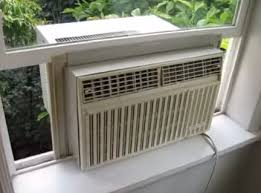
A standard window or through-the-wall air conditioner is modified to meet your hazardous location classification. The process is the same systematic re-engineering applied to all explosion-proof equipment:
- All motors replaced — compressor, condenser fan, and evaporator fan motors are swapped for explosion-proof rated equivalents certified for your specific Class, Division, and Group
- All electrical penetrations sealed — junction boxes, terminal blocks, and wiring connections are enclosed in explosion-proof rated hardware with sealing fittings per NEC requirements
- Rigid metallic conduit — all flexible wiring replaced with rigid conduit and explosion-proof fittings to prevent flame propagation
- Surface temperature verified — all surfaces confirmed to remain below the autoignition temperature for the gases, vapors, or dust in your environment
The result is a self-contained cooling unit that fits in a standard wall or window opening and operates safely in your classified area — delivering the same cooling performance as the original unit without the ignition risk.
When a Window Unit Is the Right Choice
Window units occupy a specific and valuable niche in the explosion-proof product lineup. They make sense when:
Budget is the primary constraint. At $6,700 starting price for inside-only modification, window units are the least expensive path to compliant cooling. For facilities that need to cool multiple small enclosures, the savings per unit add up quickly.
The cooling load is modest. Window units are available in smaller capacity ranges, typically up to about 2 tons (24,000 BTU). For instrument shelters, small control rooms, and equipment enclosures with limited heat-generating equipment inside, this is often sufficient.
The opening already exists. Retrofit situations where a window or wall opening is already in place make window units a natural fit. No structural modification is required beyond what is already there.
It is a temporary or interim solution. Some facilities use window units to provide immediate compliant cooling while a larger permanent system is being engineered and fabricated.
Classification Options
Window units can be modified for:
-
Class 1, Division 2, Groups C & D — the most common configuration. Covers the majority of refinery, petrochemical, and chemical plant applications where flammable vapors may be present under abnormal conditions.
-
Class 1, Division 1, Groups C & D — for areas where flammable gases are present continuously or under normal operating conditions. Division 1 requires more extensive modification and carries a higher price point.
-
Class 2, Division 1 or 2 — for combustible dust environments. Contact us to discuss dust-environment requirements and unit suitability.
-
NEC Article 505 (Zone system) — if your facility uses Zone classification, we can match equipment to Zone requirements.
Pricing
Class 1, Division 2, Group C&D — inside only (evaporator): Starting at $6,700, up to approximately $7,600 for 3-ton units
Class 1, Division 2, Group C&D — full inside + outside: Starting at $9,000 for 8,000 BTU, approximately $10,000 for 3-ton units
Division 1 modifications: Add 20–40% over Division 2 pricing
See our full pricing guide for details on what drives cost.
Inside Only vs. Inside + Outside: What It Means for Cost
This is one of the most common questions we get, and it is the single biggest factor in pricing.
Inside only (evaporator only): The wall separating your classified area from the outside serves as the classification boundary. The condenser sits outside in non-classified atmosphere. Only the indoor evaporator section needs explosion-proof modification. This is the most common and most affordable configuration — typical for control rooms and shelters that share a wall with the exterior.
Inside + outside (full modification): Both the indoor and outdoor sections are located within the classified area. Both require explosion-proof treatment. This is required for equipment shelters, blast-resistant modules, or any installation where the condenser cannot be placed outside the classified boundary.
The cost difference is typically 30–40% — significant enough that it is worth verifying your classification boundary before assuming you need full modification. Many customers initially request full modification when inside-only would satisfy their classification.
Window Unit vs. Bard Wall-Mount: Which One?
Both are self-contained, through-the-wall units. The key differences:
Capacity range. Window units are practical up to about 2 tons. Bard wall-mount units go up to 5 tons. If your cooling load is above 2 tons, a Bard unit is the better choice.
Construction quality. Bard units are built for industrial applications from the factory — heavier gauge materials, designed for outdoor exposure, and engineered for harsh environments. Window units are modified consumer or light-commercial products. For demanding installations with extreme temperatures, corrosive atmospheres, or heavy vibration, a Bard unit will last longer.
Parts availability. Bard is the dominant platform in hazardous location cooling, so replacement parts and components are more readily available long-term.
Cost. For the same classification and inside-only modification, starting prices are comparable. The real savings with window units come at the smaller end of the capacity range, where a window unit may be the only practical option.
Our recommendation: If the cooling load fits and the environment is not extremely demanding, a window unit at $6,700 is an excellent value. For anything above 2 tons, or for installations where long-term durability is critical, go with a Bard wall-mount.
Lead Time and Quoting
We typically return quotes within 24–48 hours of a conversation where we understand your classification and BTU requirements. Lead time on fabrication varies based on current workload and the complexity of the modification — typically 4–8 weeks from order to delivery.
Call (844) 925-5668 to get a quote or ask questions about your application. Or request a quote online.
Related Pages
- What Is an Explosion Proof Air Conditioner? — complete guide with classifications, pricing, and real installations
- Explosion Proof Bard Air Conditioners — wall-mount units, the most common modification
- Explosion Proof Split Systems — for higher capacity or no-wall-penetration installs
- How Much Does It Cost? — full pricing breakdown across all unit types
- How to Choose an Explosion Proof Air Conditioner — step-by-step buyer’s guide
- Class 1, Division 2 Explained — the most common classification
- Pressurization Systems — an alternative for large buildings
- Phenicon Coating — industrial-grade corrosion protection for any unit type
- Custom Explosion Proof Air Conditioners — specialty builds for non-standard installations
- FAQ — common questions about explosion-proof AC